

Behavioural Addictions VS. Substance Addictions

Reach out now, we can help
Home / Posts tagged "Rehab Gauteng" (Page 4)

Behavioural Addictions VS. Substance Addictions

11 November, 2020Articles, News

Seeking treatment and help for substance addiction is a lot easier than seeking help for behavioural addictions. One of the reasons for this may be the denial surrounding behavioural addictions.

ADDICTION EXPLAINED:

The simple explanation of addiction is a primary chronic disease of the brain reward, motivation, memory and body that involves compulsive use of one or more substances despite the serious health risks and social consequences that may result from our actions. Addiction disrupts regions of the brain that are responsible for reward, motivation, learning, judgement as well as memory. It damages various body systems as well as families, relationships, education and work.

One of the primary reasons for making it difficult to identify that a specific behaviour has become an addiction is that substance addiction affects the body and has serious visible health consequences and behavioural addictions do not present themselves with this specific consequence thus admitting to having a behavioural addiction is challenging.

  • Addiction is often characterized by:
    • Inability to abstain.
    • Impairment in behavioural control.
    • Craving or increased need for drugs or rewarding behaviours.
    • Diminished recognition of significant problems with one’s behaviours and interpersonal relationships.
    • Dysfunctional emotional responses.

BEHAVIOURAL ADDICTION EXPLANATION

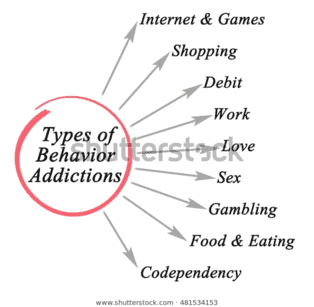
Behavioural addiction happens when an individual becomes pathologically focused on pursuing reward by engaging in behaviour. Often the individual struggles to refrain from the behaviour, experiences intense cravings, has difficulty resisting and has minimal awareness of the problems and or consequences that arise as a result of their behavioural addiction, including- loss of time and loss of the ability to prioritize other life functions and responsibilities.

  • Some examples of behavioural addictions are:

It is difficult to seek help or treatment if you are not sure that there is a problem. Identifying your addiction and understanding the consequences of it and deciding to seek help are the first steps to recovery.

CONSEQUENCES AND OR DANGERS OF ADDICTION

Whether it is sex, gambling or substances- when these activities are indulged and enjoyed the reward pathways in the brain release dopamine, also known as the “feel-good” hormone.

This chemical rush acts as a positive reinforcement to the body and over time the brain is conditioned to seek out that dopamine release. This leads to an altered mental state affecting decision-making and potentially leading to dangerous consequences as is the case with substance addiction which could result in an overdose. A behavioural addiction, such as gambling, could result in bankruptcy.

Behavioural addictions carry the same characteristics as that of substance addiction.

CHARACTERISTICS OF ADDICTION

Compulsive use or acting out on behaviour.
As the addict continues to ingest the substance or engage in the behaviour, tolerance develops and it takes larger doses of the substance or behaviour to produce the sought-after pleasure or relief.

Craving
This means that the body and brain send intense signals that the drug or behaviour is needed. Psychological cravings related to the experience of taking the substance or engaging in the behaviour may occur.

Loss of control
Addicts cannot predict or determine how much of the substance they will be using or when they will be using, however, once they begin, they cannot stop. The same loss of control applies to behavioural addictions such as gambling, sex, food or gaming.

Continued use despite adverse consequences
Behavioural addictions have negative consequences. Addicts often are not aware of these consequences due to denial. Adverse consequences include loss of time at work, failing interpersonal relationships and negatively impacted financial well-being. Addicts feel that the pleasure derived from the substance or behaviour outweighs the consequences.

Tolerance
Continual use of a substance affects the body which soon adapts and begins to tolerate the drugs pharmacological effect, as a result, the addict needs more of either the substance or the behaviour to achieve the same effect of the initial experience.

Withdrawal
Withdrawal symptoms are unpleasant physical symptoms when the substance or behaviour is withheld.

To conclude that the effects of substance addiction are different or more severe than behavioural addictions would be erroneous.

The mental, physical and spiritual effects of behavioural addiction are much the same as with substance addiction and both carry dire consequences to both the addict and significant others in the addict’s life and treatment for both is equally important.
If you or anyone close to you needs help with an addiction to sex, gambling, substances, alcohol or food, please contact us for a free assessment.

www.crossroadsrecovery.co.za

074 89 51043 JHB

012 450 5033 PTA

Resources
American Psychiatric Association www.mentalhelp.net
World Health Organisation: ICD 10 classification of behavioural disorders (www.nlm.nih.gov)
Goodman A: Addiction definition and implications (www.researchgate.net)
American Society of Addiction Medicine policy (www.asam.org)

No Obligation Addiction Assessment

Book a No Obligation Confidential Assessment at your nearest Treatment Centre Today.

Johannesburg Admissions: +27 74 895 1043
Pretoria Admissions: +27 82 653 3311
Close

Stories of Recovery

  • The encouragement, love and support from the team at Crossroads allowed me to eventually see that I was worth something - that my life could be turned around and that I could accomplish the things that had long been a forgotten dream.
    Oliver VG
    Read more
  • On the last day of my stint at Crossroads I could only express gratitude towards all who works there. A wise councillor once commented on my question when one is ready for rehab by explaining that when one is ready for rehab, rehab is ready for you.
    Johan B
    Read more
  • I was lost and my soul was broken until I ended up at Crossroads and was introduced to the Twelve Steps. With the help of their excellent staff and amazing support I have recently been clean for 18 months, I could not have done it without them!
    Carla S
    Read more
  • "Just for today I am more than three years in recovery. I have Cross Roads to thank for this wonderful gift. Cross Roads helped me to set a firm foundation in my recovery on which I can continue to build."
    Angelique J
    Read more
Left Arrow Right Arrow

Approved Medical Aids

Bestmed LogoBonitas LogoCAMAF LogoDiscovery Health LogoFedhealth LogoGovernment Employees Medical SchemeLiberty CorporateMedihelp Medical Scheme

Self-centredness : 5 Min. Podcast

Reach out now, we can help
Home / Posts tagged "Rehab Gauteng" (Page 4)

Self-centredness : 5 Min. Podcast

10 November, 2020Podcasts, News

Self-centredness · 5 min Contemplation: Crossroads Recovery Centre

Self-centredness or selfishness may be the root of all our problems. If we could find a cure for this we may be able to find a way to be more present in the world.

When I am concerned with my own losses and losing out, then I am not being present in my own life – I am not accepting my reality, I am obsessing about my own self-centredness. When I find myself struggling to accept the ebb and flow of life and I am concerned with myself and my own self-protection, I am not present in my own life.

Do I find that I give of myself with the expectation that the favour will be returned in the future ? Giving of myself should be done without expectations of anything in the future. It should be without self-centredness.

Addressing my self-centredness is important in accepting how and where my life is at the moment.

This podcast was recorded as a series of lectures given to people in 12 step addiction recovery treatment. The purpose of these talks was to teach and motivate individuals to search for their own spiritual solution to their addiction.

Please feel free to contact me directly or go to our site for more information:

dominic@crrc.co.za

www.crossroadsrecovery.co.za

+27 012 345 1186 Pretoria

+27 010 597 7784 Johannesburg

No Obligation Addiction Assessment

Book a No Obligation Confidential Assessment at your nearest Treatment Centre Today.

Johannesburg Admissions: +27 74 895 1043
Pretoria Admissions: +27 82 653 3311
Close

Stories of Recovery

  • The encouragement, love and support from the team at Crossroads allowed me to eventually see that I was worth something - that my life could be turned around and that I could accomplish the things that had long been a forgotten dream.
    Oliver VG
    Read more
  • On the last day of my stint at Crossroads I could only express gratitude towards all who works there. A wise councillor once commented on my question when one is ready for rehab by explaining that when one is ready for rehab, rehab is ready for you.
    Johan B
    Read more
  • I was lost and my soul was broken until I ended up at Crossroads and was introduced to the Twelve Steps. With the help of their excellent staff and amazing support I have recently been clean for 18 months, I could not have done it without them!
    Carla S
    Read more
  • "Just for today I am more than three years in recovery. I have Cross Roads to thank for this wonderful gift. Cross Roads helped me to set a firm foundation in my recovery on which I can continue to build."
    Angelique J
    Read more
Left Arrow Right Arrow

Approved Medical Aids

Bestmed LogoBonitas LogoCAMAF LogoDiscovery Health LogoFedhealth LogoGovernment Employees Medical SchemeLiberty CorporateMedihelp Medical Scheme

What is “Wet Brain” ?

Reach out now, we can help
Home / Posts tagged "Rehab Gauteng" (Page 4)

What is “Wet Brain” ?

06 November, 2020Articles, News

Wet brain, or Wernicke-Korsakoff syndrome, is a form of brain damage that results from repeated and severe exposure to alcohol. It stems from a thiamine (vitamin B1) deficiency. Thiamine is an essential vitamin in the body that doesn’t occur naturally. A person must ingest it to achieve their daily recommended amount. The amount of thiamine in a person’s system diminishes as a result of a poor diet, which frequently occurs in people who abuse alcohol. Alcohol hinders a person’s ability to absorp thiamine, and it diminishes the reserves that are stored in the liver. To complicate matters, alcohol also interferes with the enzyme that changes thiamine into its active state.

All tissue throughout the body requires thiamine. Several enzymes in the brain need thiamine to develop and function and some of these enzymes need thiamine in order to synthesise neurotransmitters in the brain. As a person repeatedly abuses alcohol and a thiamine deficiency develops, brain damage occurs. The National Institute on Alcoholism and Alcohol abuse declares thiamine deficiency as a rare occurrence in developed countries other than in people with an alcohol abuse issue or conditions such as HIV.

Wernicke-Korsakoff syndrome consists of two individual syndromes: Wernicke’s encephalopathy and Korsakoff’s psychosis. Wernicke’s encephalopathy is a condition that causes neurological symptoms as a result of biochemical lesions of the nervous system. It affects specific portions of the brain, including the thalamus and hypothalamus, which play a role in memory. Korsakoff’s psychosis is a long-lasting condition that tends to develop after the Wernicke’s encephalopathy symptoms go away. Korsakoff’s psychosis arises as a result of permanent damage to the parts of the brain responsible for memory.

What Are the Symptoms of Wet Brain?

The symptoms of wet brain vary depending on whether the person is experiencing Wernicke’s encephalopathy or Korsakoff’s psychosis.

Wernicke’s encephalopathy causes various symptoms, such as

*Confusion
*Loss of mental activity that can lead to a coma or death
*Loss of muscle coordination (ataxia) that may lead to a slow or unsteady gait
*Memory issues

Some people experience changes in vision, such as abnormal, back-and-forth eye movements. They may have double vision, or their eyelids may droop. When Korsakoff’s psychosis arises, people may lose the ability to develop new memories, and they may experience severe memory loss. Both visual and auditory hallucinations may occur. Some people who have Korsakoff’s syndrome may make up stories, which fill the gaps in their memories.

The National Institute on Alcohol Abuse and Alcoholism indicates that approximately 80-90 percent of those who suffer from alcoholism and have Wernicke’s encephalopathy develop Korsakoff’s psychosis as well.

How Common Is Wet Brain?

According to the National Institute on Alcohol Abuse and Alcoholism, up to 80 % of people with an alcohol use disorder have a thiamine deficiency. The National Organization for Rare Diseases states that 1-2 percent of the US population has Wernicke-Korsakoff syndrome.

Currently, there’s not an exact count as to how many people have Wernicke-Korsakoff as a result of alcoholism since some people who have the condition are homeless or do not seek medical attention. The disorder is more common in men than in women. The age bracket affected includes those between 30 and 70 years old.

Who Is Most at Risk?

The National Institute on Alcohol Abuse and Alcoholism reveals the amount of brain damage experienced from alcohol exposure correlates to how much and how frequently a person drinks. The age the person started drinking along with how long the person has been drinking plays also plays a role, as do gender and age.

Genetics can impact if, and how much, brain damage occurs due to alcoholism. Those who have a family history of alcoholism are more at risk for wet brain, and those who were exposed to alcohol while in the womb have a greater chance of developing Wernicke-Korsakoff syndrome. A person’s overall health will impact whether or not they will develop wet brain.

How Is Wet Brain Diagnosed?

There isn’t specific diagnostic testing used in all cases of wet brain. Generally, a practitioner will suspect a vitamin deficiency based on the patient’s physical appearance, gait, and behaviours. If a doctor is aware of an alcohol problem and the person exhibits symptoms of wet brain, further testing may be conducted.

Since there isn’t a standardized test to diagnose the condition, the doctor will conduct a thorough examination of the neurological system. The physician exams the eyes to determine any issues with eye movement, such as the eyes moving back and forth and misalignment of the pupils. The physician will also examine the person’s reflexes, as those with the condition have abnormal or decreased reflexes.

Those with wet brain tend to have decreased muscle mass and muscle weakness. This is due to thiamine being involved in the development of muscle tissue. The condition alters a person’s gait, so the doctor evaluates how the person walks. Oftentimes, those who have the disease have a rapid heart rate known as tachycardia. Blood pressure and body temperature slow since the disease affects the part of the brain responsible for regulating these functions.

Sometimes, it’s possible for a doctor to look at a person and see signs of malnutrition, but generally, the doctor will conduct certain tests to determine vitamin deficiencies. Through blood testing, a doctor may test a person’s serum albumin, which evaluates the person’s general nutrition. The doctor specifically tests the person’s thiamine level. Those who have thiamine deficiency have reduced activity in the red blood cells, more specifically with transketolase activity.

What Is the Prognosis for People with Wet Brain?

Statistics denoted by Merck Manuals indicate the mortality rate of people who have Wernicke’s encephalopathy is 10-20 percent. Of the people who survive, 80 percent will develop Korsakoff’s psychosis. Without treatment, the condition gets worse and may result in coma or even death.

Wernicke-Korsakoff syndrome isn’t curable; however, with treatment, doctors are able to slow or stop the progression. Treatments can help with certain aspects of the condition, but some problems like memory loss aren’t always reversible once it progresses. Early detection does have the potential to reduce damage and reverse some of it; therefore, those who suspect they may have the condition should seek treatment as soon as possible to minimize the amount of brain damage done.

How Is Wet Brain Treated?

Generally, a doctor will prescribe medications to control the symptoms, such as rapid eye movements. The doctor will advise the patient on ways to increase levels of thiamine and may prescribe a vitamin supplement. The person may receive vitamin B1 through an oral medication or by intravenous or intramuscular injections.

The supplemental thiamine may improve the symptoms of confusion or delirium. It may also improve muscle coordination and eye problems. However, vitamin B1 will not improve the intellect or memory of people who have Wernicke-Korsakoff syndrome.

People with wet brain need to seek treatment for their alcohol use disorder if they haven’t already done so, in order to stop or slow the progression of the disorder.

What Complications Can Occur from Wet Brain?

In addition to potential death or coma, Wernicke-Korsakoff syndrome leads to permanent brain damage, which affects a person’s memory and thinking. A person may have difficulty with social interactions. The loss of coordination and issues with gait associated with the disorder can lead to injuries.Those who have the condition can develop permanent alcohol neuropathy, which affects the nervous system. People with Wernicke-Korsakoff syndrome tend to have decreased lifespans.

www.crossroadsrecovery.co.za

074 89 51043 JHB

012 450 5033 PTA

RESOURCE
https://americanaddictioncenters.org/alcoholism-treatment/wet-brain

No Obligation Addiction Assessment

Book a No Obligation Confidential Assessment at your nearest Treatment Centre Today.

Johannesburg Admissions: +27 74 895 1043
Pretoria Admissions: +27 82 653 3311
Close

Stories of Recovery

  • The encouragement, love and support from the team at Crossroads allowed me to eventually see that I was worth something - that my life could be turned around and that I could accomplish the things that had long been a forgotten dream.
    Oliver VG
    Read more
  • On the last day of my stint at Crossroads I could only express gratitude towards all who works there. A wise councillor once commented on my question when one is ready for rehab by explaining that when one is ready for rehab, rehab is ready for you.
    Johan B
    Read more
  • I was lost and my soul was broken until I ended up at Crossroads and was introduced to the Twelve Steps. With the help of their excellent staff and amazing support I have recently been clean for 18 months, I could not have done it without them!
    Carla S
    Read more
  • "Just for today I am more than three years in recovery. I have Cross Roads to thank for this wonderful gift. Cross Roads helped me to set a firm foundation in my recovery on which I can continue to build."
    Angelique J
    Read more
Left Arrow Right Arrow

Approved Medical Aids

Bestmed LogoBonitas LogoCAMAF LogoDiscovery Health LogoFedhealth LogoGovernment Employees Medical SchemeLiberty CorporateMedihelp Medical Scheme

When Gamblers Become Gambling Addicts

Reach out now, we can help
Home / Posts tagged "Rehab Gauteng" (Page 4)

When Gamblers Become Gambling Addicts

04 November, 2020Articles, News

Gambling has the same physiological or hormonal effect on the brain as the use of drugs and alcohol. It begins with the surge of excitement in anticipation of the act, the extreme adrenaline rush that occurs when gambling and the unparalleled high of winning, followed by the compulsion to do it all over again. Gambling addiction, like drug and alcohol addiction, is a seriously devastating problem that has far-reaching consequences. These are a few of the warning signs of how to recognise when gamblers become gambling addicts.

Compulsively Chasing Losses

Winning a game produces an exhilarating high for any gambler. The difference between periodic gamblers and gambling addicts, is that for the latter, that high is addictive. Gambling addicts will stop at nothing to achieve that first high again and again. On the other hand, losing produces a mental low that can feel like extreme disappointment and in some cases, depression. When this happens, most gamblers know when to stop. Gambling addicts however, find themselves unable to resist “chasing their losses”. In other words, they place even higher bets or cash in even more money in an attempt to win back the money they have lost. It is not uncommon for gambling addicts to max out multiple credit cards, pawn their valuables or even steal money to chase their losses, believing that “one more bet” or “one more hand” will see their luck restored. This behaviour leads to an inevitable and vicious downward spiral.

Mental and Emotional Instability

We see it in the movies all the time – heroin addicts withdrawing, writhing in pain, lashing out at those around them or being unable to get out of bed. What we don’t often see in the movies, is the way in which gambling addicts withdraw. In truth, withdrawal from gambling and withdrawal from drugs can look surprisingly similar. Gambling addicts who don’t get their fix can become extremely aggressive and unable to be in the presence of others. They can become visibly agitated and hostile towards those around them. Only a trip to the casino can abate what can accurately be described as a craving. For an addict in the grips of a gambling addiction, anything that stands in the way of them placing the next bet, becomes a threat that needs to be removed. Unfortunately, this can lead to strained relationships, emotional unavailability and in some cases, abuse.

Secretiveness

Gambling addiction may be difficult to spot at first, because gambling addicts may feel compelled to keep their behaviour a secret. They may feel deeply ashamed or embarrassed – deep down they may know that they have a problem but may be resistant to asking for help. Warning signs include dishonesty around their whereabouts or the inability to explain how they are spending their money. A common experience is that gambling addicts may be too afraid to explain why their money has run out, so they keep their gambling behaviour a secret, secretly dreaming of the day they can appease their loved ones with the surprise of a big win. Unfortunately, for gambling addicts that win is never big enough and a win always precedes another bet in the hopes of winning even bigger. The compulsion is all-consuming.

If you or a loved one is suffering from gambling addiction, know that help is readily available. Contact us for a free consultation and we’ll support you in your recovery journey.

www.crossroadsrecovery.co.za

074 89 51043 JHB

012 450 5033 PTA

RESOURCES

Helpguide.org

No Obligation Addiction Assessment

Book a No Obligation Confidential Assessment at your nearest Treatment Centre Today.

Johannesburg Admissions: +27 74 895 1043
Pretoria Admissions: +27 82 653 3311
Close

Stories of Recovery

  • The encouragement, love and support from the team at Crossroads allowed me to eventually see that I was worth something - that my life could be turned around and that I could accomplish the things that had long been a forgotten dream.
    Oliver VG
    Read more
  • On the last day of my stint at Crossroads I could only express gratitude towards all who works there. A wise councillor once commented on my question when one is ready for rehab by explaining that when one is ready for rehab, rehab is ready for you.
    Johan B
    Read more
  • I was lost and my soul was broken until I ended up at Crossroads and was introduced to the Twelve Steps. With the help of their excellent staff and amazing support I have recently been clean for 18 months, I could not have done it without them!
    Carla S
    Read more
  • "Just for today I am more than three years in recovery. I have Cross Roads to thank for this wonderful gift. Cross Roads helped me to set a firm foundation in my recovery on which I can continue to build."
    Angelique J
    Read more
Left Arrow Right Arrow

Approved Medical Aids

Bestmed LogoBonitas LogoCAMAF LogoDiscovery Health LogoFedhealth LogoGovernment Employees Medical SchemeLiberty CorporateMedihelp Medical Scheme
add_action('wp_footer', function() { ?>