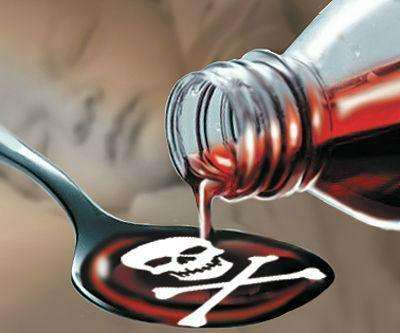
COUGH SYRUP EPIDEMIC. Lean is the street name for cough syrup containing codeine mixed with soft drinks. The drug is becoming more common in everyday use. It is popular among adolescents and young adults in lower income areas. The drug is freely available at such a low price that it is exceedingly easy to obtain and use. Not only can anyone walk into any pharmacy and buy it, there are even dealers who carry these products so that the users may avoid possible scrutiny from the people who sell it.
The Symptoms and
effects of Lean:
Codeine is the active ingredient in lean and as it is an
opiate, it is highly addictive and does cause physical dependence. This means
that prolonged use of the drug may lead to withdrawal.
In addition to this the symptoms
of codeine use include, but are not limited to: drowsiness, memory
loss, black out, nausea, vomiting, dysphoria, euphoria, dissociation, in
extreme cases use may lead to seizures, and respiratory depression which can often
lead to death.
Laws and Regulations
of Pharmaceutical Companies in South Africa:
The cough syrup which is being used is freely available over the counter at pharmacies. There are regulations in place to try and combat the abuse of these medications, pharmacies are legally bound to take a person’s details when they buy codeine products and are only allowed to sell one product per person at any time. In addition to that, Adcock Ingram, one of South Africa’s biggest pharmaceutical companies, have a dedicated team looking out for suspiciously large or frequent orders. These measures, however honorable, still fall short. Without a national database there is no way to ensure someone is not buying from multiple pharmacies. In addition to this, corrupt pharmacists and drug dealers find ways and means around the regulation that have been put in place.
How do we make a
change in combatting Lean?
Combating an epidemic of these proportions starts first with taking the problem seriously. The regulatory bodies within South Africa have seen the problem and are taking measures to keep the population safe, but ultimately the responsibility lies with the individual. Even over the counter substances need to be taken seriously and treated as dangerous and addictive. Most importantly, any addiction needs to be treated as such. Just because the substance a person is addicted to seems innocuous it does not mean that the addiction itself is harmless.
No Obligation Addiction Assessment
Book a No Obligation Confidential Assessment at your nearest Treatment Centre Today.
The encouragement, love and support from the team at Crossroads allowed me to eventually see that I was worth something - that my life could be turned around and that I could accomplish the things that had long been a forgotten dream.
On the last day of my stint at Crossroads I could only express gratitude towards all who works there. A wise councillor once commented on my question when one is ready for rehab by explaining that when one is ready for rehab, rehab is ready for you.
I was lost and my soul was broken until I ended up at Crossroads and was introduced to the Twelve Steps. With the help of their excellent staff and amazing support I have recently been clean for 18 months, I could not have done it without them!
"Just for today I am more than three years in recovery. I have Cross Roads to thank for this wonderful gift. Cross Roads helped me to set a firm foundation in my recovery on which I can continue to build."
A gambling addiction is a progressive addiction that can have many negative psychological, physical, and social repercussions. It is classed as an impulse-control disorder.
Problem gambling is harmful to psychological and
physical health. People who live with this addiction may experience depression,
migraine, distress, intestinal disorders, and other anxiety-related problems.
As with other addictions, the consequences of
gambling can lead to feelings of despondency and helplessness. In some cases,
this can lead to attempts at suicide.
The rate of problem gambling has risen globally
over the last few years. In the United States in 2012, around 5.77 million
people had a gambling disorder that needed treatment.
Because of its harmful consequences, gambling
addiction has become a significant public health concern in many countries.
Symptoms
Gambling addiction comes in many forms, the primary
symptom being a craving for gaming.
Some of the signs and symptoms of problem gambling
include:
Gambling is not a financial problem, but an
emotional problem that has financial consequences.
It also impacts the way in which the person with
the disorder relates to his or her family and friends. For instance, they may
miss important events in the family, or they might miss work.
Diagnosis
For a diagnosis of gambling addiction, The DSM-5 states that a person must show or experience at least four of the following during the past 12 months:
Need to gamble with increasing amounts of money
to feel excitement
Restlessness or irritability when trying to stop
gambling
Repeated unsuccessful attempts to stop, control,
or reduce gambling
Thinking often about gambling and making plans
to gamble
Gambling when feeling distressed
Returning to gamble again after losing money
Lying to conceal gambling activities
Experiencing relationship or work problems due
to gambling
Depending on others for money to spend on
gambling
Triggers
Gambling can lead to a range of problems, but the
addiction can happen to anyone. No one can predict who will develop an
addiction to gambling.
The activity can be described on a spectrum, ranging
from abstinence through recreational gambling to problem gambling.
Gambling behaviour becomes a problem when it cannot
be controlled and when it interferes with finances, relationships, and the
workplace. The individual may not realize they have a problem for some time.
Many people who develop a gambling addiction are
considered responsible and dependable people, but some factors can lead to a
change in behaviour.
These could include:
retirement
traumatic circumstances
job-related stress
emotional upheaval, such as depression or
anxiety
loneliness
the presence of other addictions
environmental factors, such as friends or
available opportunities
Studies have suggested that people with a tendency
to one addiction may be more at risk of developing another. Genetic and
neurological factors may play a role.
Some people who are affected by gambling may also
have a problem with alcohol or drugs, possibly due to a predisposition for
addiction.
The use of some medications has been linked to a
higher risk of compulsive gambling.
Secondary addictions can also occur in an effort to
reduce the negative feelings created by the gambling addiction. However, some
people who gamble never experience any other addiction.
Addiction
Gambling addiction is a debilitating condition, causing depression and distress.
For someone with a gambling addiction, the feeling
of gambling is equivalent to taking a drug or having a drink.
Gambling behaviour alters the person’s mood and
state of mind.
As the person becomes used to this feeling, they
keep repeating the behaviour, attempting to achieve that same effect.
A person who has an addiction to gambling needs to
gamble more to get the same “high.” In some instances, they
“chase” their losses, thinking that if they continue to engage in
gambling, they will win back lost money.
A vicious circle develops, and an increased craving
for the activity. At the same time, the ability to resist drops. As the craving
grows in intensity and frequency, the ability to control the urge to gamble is
weakened.
This can have a psychological, personal, physical, social, or professional impact.
Neither the frequency of gambling nor the amount lost will determine whether gambling is a problem for an individual. .
Some people engage in periodic gambling binges
rather than regularly, but the emotional and financial consequences will be the
same.
The encouragement, love and support from the team at Crossroads allowed me to eventually see that I was worth something - that my life could be turned around and that I could accomplish the things that had long been a forgotten dream.
On the last day of my stint at Crossroads I could only express gratitude towards all who works there. A wise councillor once commented on my question when one is ready for rehab by explaining that when one is ready for rehab, rehab is ready for you.
I was lost and my soul was broken until I ended up at Crossroads and was introduced to the Twelve Steps. With the help of their excellent staff and amazing support I have recently been clean for 18 months, I could not have done it without them!
"Just for today I am more than three years in recovery. I have Cross Roads to thank for this wonderful gift. Cross Roads helped me to set a firm foundation in my recovery on which I can continue to build."