We are pleased to bring you the first in a series of talks, Conversations @ The Crossroads. In the first episode, Taku Mhonyera, Head of Treatment at Crossroads Johannesburg talks to Dr. Tich. If you or anyone close to you needs help with an addiction to sex,gambling, substances, alcohol or food, please contact us for a free assessment.
No Obligation Addiction Assessment
Book a No Obligation Confidential Assessment at your nearest Treatment Centre Today.
Currently it’s estimated that 20% of the worlds population is under lockdown as a result of the Covid-19 pandemic. Churches and other places of worship are closed, gatherings of more that 10 people in South Africa are prohibited and recreational visits are not allowed. This leaves those in recovery isolated and unsure of what to do.
Something that was emphasised in my early recovery was the importance of a home group and connecting with others in recovery. A home group is a meeting I attended religiously, I was of service at this meeting and connected with the members of that meeting. This gave me a feeling of being part of a community, a group of people who understood what I had been through and were able to guide me on the path out of hopelessness. Addiction is a disease that thrives in isolation, recovery thrives through connection.
The
current world situation means that those in recovery are not able to
connect as they used to. We are unable to physically attend meetings,
unable to sit across from a sponsor and do step work, unable to
socialise with friends in recovery. As a result there is a feeling of
disconnection. We are currently unable to do the things that we were
told would keep us clean. I have heard many say, “when this is all
over I can focus on my recovery.”
The
reality is, that this attitude is not realistic. There is uncertainty
as to how long this pandemic will last and what the new normal will
look like. Relapse, overdose and death are real for those who are not
actively working a recovery program. Waiting is not an option.
The worldwide fellowships of AA and NA have had to adapt to the current world situation to ensure that those looking for recovery can find it. Previously underused technology has become the primary way of keeping addicts and alcoholics connected. Meetings have moved online using various platforms such as Zoom and Skype.
There
are currently 1000’s of meetings taking place all over the world at
all hours of the day. The ability to connect has become so much
easier. At anytime of the day I am able to connect with addicts all
over the world. I am able to join meetings I would never physically
have been able to attend. Theses platforms allow for the community to
maintain their recovery and for new people to find recovery.
The
sponsor – sponsee relationship has also had to move online, the
means to be taken through the steps is there – via email, WhatsApp
and the meeting platforms. A process that was previously reserved for
long distance sponsorship and prisons can work for everyone in these
times.
The “normal” way of doing recovery from addiction is no longer possible. But we live in a time where connection has become so much easier when I embrace what is available to me – technology. The ability to connect is there and recovery is still possible.
If you believe you have a problem and need help, please follow the links below and join the community.
The encouragement, love and support from the team at Crossroads allowed me to eventually see that I was worth something - that my life could be turned around and that I could accomplish the things that had long been a forgotten dream.
On the last day of my stint at Crossroads I could only express gratitude towards all who works there. A wise councillor once commented on my question when one is ready for rehab by explaining that when one is ready for rehab, rehab is ready for you.
I was lost and my soul was broken until I ended up at Crossroads and was introduced to the Twelve Steps. With the help of their excellent staff and amazing support I have recently been clean for 18 months, I could not have done it without them!
"Just for today I am more than three years in recovery. I have Cross Roads to thank for this wonderful gift. Cross Roads helped me to set a firm foundation in my recovery on which I can continue to build."
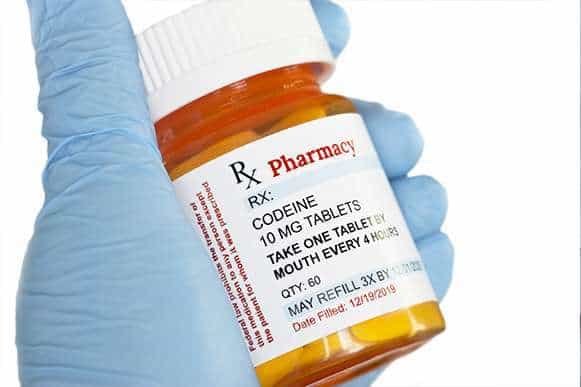
As a member of the opiate classification of drugs, codeine acts as a central nervous system depressant, resulting in decreased sensations of pain and increased pleasurable sensations due to the drug’s indirect effect on the dopamine reward system in the brain, which results in significant potential for the development of physical dependence. Codeine also affects areas of the brain that are involved in very basic functions, such as respiration and coughing, and the drug is commonly found as a cough suppressant in prescription cough syrups.
Codeine abuse is common among young people
The National Institute on Drug Abuse (NIDA) reports on an emerging trend in individuals under the age of 25 that involves abuse of codeine. Codeine is easily accessible; anyone can buy it at any pharmacy across South Africa.
There is a trend of drinking dangerous amounts of cough syrup which contains codeine-promethazine in order to experience psychoactive effects. Promethazine is an antihistamine, and codeine acts as a cough suppressant. In large doses, these substances can produce extreme sedation, mild feelings of wellbeing, and a release of inhibitions. Street names for this particular form of cough syrup include purple syrup, syrup, and sizzurp.
Actual figures regarding how many individuals are abusing codeine are not readily available, but the practice appears to be focused among younger individuals. The abuse of codeine represents a serious threat to these individuals in terms of their long-term health and the potential for overdose.
The Effects of Abusing Codeine
People abusing codeine will quickly develop tolerance to the drug and will need to take larger amounts of it to get the effects that they once achieved at significantly lower doses. As the individual takes larger amounts of the drug at regular intervals, they are more likely to develop physical dependence.
Even though the withdrawal symptoms associated with physical dependence on codeine are reportedly mild in comparison to the symptoms that occur with morphine and heroin, individuals who use large amounts of the drug for lengthy periods of time may get caught in a cycle of abuse to avoid these withdrawal symptoms.
The withdrawal process associated with codeine is not generally believed to be potentially physically dangerous; however, individuals who are emotionally unstable or prone to poor judgment may be at risk for harm due to accidents, impulsive behaviours, or even suicide in extreme cases. Individuals who mix codeine with other drugs, such as alcohol, or other medications, stimulants, or benzodiazepines, may be at risk for a number of potentially serious physical complications during the withdrawal process. These may include issues with cardiovascular functioning and the development of potential seizures (especially for individuals who abuse codeine on a regular basis with benzodiazepines or alcohol).
Treatment of codeine addiction
It appears that the majority of individuals who abuse codeine are younger; approaching these individuals with concerns about their behaviour can be very tricky. It is well known that individuals who have substance abuse issues can be very defensive regarding their use of drugs and/or alcohol, and younger individuals may become even more so when confronted by a parent, friends, or other relatives. Many sources refer to this tendency to be reactive as “denial,” which itself is suggested to be a symptom of a substance use disorder.
If you or a loved one are battling a codeine addiction and are in search of rehabilitation contact Crossroads Recovery Centre for a free assessment, the individual can be tested and the treatment options can be discussed. Codeine addiction usually requires a medical detoxification and professional help is required for sustained abstinence.
The encouragement, love and support from the team at Crossroads allowed me to eventually see that I was worth something - that my life could be turned around and that I could accomplish the things that had long been a forgotten dream.
On the last day of my stint at Crossroads I could only express gratitude towards all who works there. A wise councillor once commented on my question when one is ready for rehab by explaining that when one is ready for rehab, rehab is ready for you.
I was lost and my soul was broken until I ended up at Crossroads and was introduced to the Twelve Steps. With the help of their excellent staff and amazing support I have recently been clean for 18 months, I could not have done it without them!
"Just for today I am more than three years in recovery. I have Cross Roads to thank for this wonderful gift. Cross Roads helped me to set a firm foundation in my recovery on which I can continue to build."
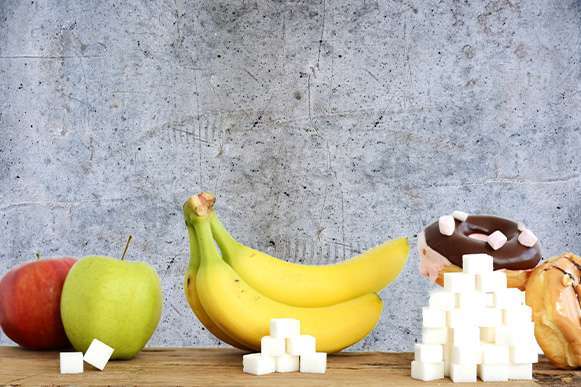
Food addiction – It’s a loaded term that has become synonymous in certain contexts, with compulsive over-eating. It is a term that has come to describe a specific type of process addiction that is differentiated in recovery circles, from substance addictions like drug addiction and alcoholism. At Crossroads Recovery Centres, we understand that the term “food addiction,” can also apply to a range of other obsessive and disordered eating habits. In this article, we discuss some of these behaviours and what treatment for food addiction entails.
As stated above, in its most basic sense, food addiction refers to over-eating. It is a term that describes the loss of control over eating and an increasing obsession with food. What many food addicts attest to, is an overwhelming and relentless compulsion to eat when certain emotions arise. Emotions, for food addicts, are uncomfortable realities, and eating serves as a numbing behaviour, blocking out emotions like hurt, disappointment and anger. Likewise, even positive emotions can trigger an over-eating episode.
What counsellors at a number of food addiction treatment facilities report however, is that food addiction often goes far beyond over-eating. It is one manifestation of the disease of addiction that seems to adapt and transform over time, with food addicts cross-addicting from over-eating, to starving, to binging and even purging. These behaviours are characteristic of different types of food addiction like anorexia nervosa and bulimia, but what is important to understand is that these behaviours can all be observable in the same food addict. Cross-addiction when it comes to disordered eating, is not an uncommon phenomenon. For this reason, food addiction can also be used to describe any compulsion to use food to escape one’s emotions, and the inability to refrain from harmful behaviour around food despite negative consequences.
Food addiction treatment facilities have helped many food addicts to recover and rebuild a healthy relationship with food. Over time, with group therapy, individual counselling, workshops and contact with other addicts in a 12-step fellowship, food addicts can reach a place of inner contentment and self-love. At Crossroads Recovery Centres, our counselling team has many years of experience with working with food addicts and helping them to recover their lives in a physical, emotional, mental and spiritual sense.
If you or a loved one is in search of help for food addiction of any kind, know that help is readily available. Contact us for a free consultation and we’ll support you in your journey.
No Obligation Addiction Assessment
Book a No Obligation Confidential Assessment at your nearest Treatment Centre Today.
The encouragement, love and support from the team at Crossroads allowed me to eventually see that I was worth something - that my life could be turned around and that I could accomplish the things that had long been a forgotten dream.
On the last day of my stint at Crossroads I could only express gratitude towards all who works there. A wise councillor once commented on my question when one is ready for rehab by explaining that when one is ready for rehab, rehab is ready for you.
I was lost and my soul was broken until I ended up at Crossroads and was introduced to the Twelve Steps. With the help of their excellent staff and amazing support I have recently been clean for 18 months, I could not have done it without them!
"Just for today I am more than three years in recovery. I have Cross Roads to thank for this wonderful gift. Cross Roads helped me to set a firm foundation in my recovery on which I can continue to build."