Treatment for Addiction : The Jellinek Curve Explained.

Reach out now, we can help
Home / Posts tagged "Process addictions" (Page 3)

Treatment for Addiction : The Jellinek Curve Explained.

02 December, 2020Articles, News

The Jellinek Curve remains a useful tool in understanding why treatment for addiction is necessary, and why will power will not be enough to overcome addiction. The Jellinek Curve outlines the progression of the disease of addiction and is useful as a tool to motivate addicts towards a positive and lasting change, as the addict will be able to identify with the different stages of substance abuse.

The curve was originally created to detail the stages of alcohol addiction and recovery. It has however been adapted to represent all forms of addiction.

Once a person has a clearer understanding of how addiction develops and what recovery from addiction means, they can begin to understand why treatment is necessary for recovery and they can then begin to work on relapse prevention as well.

The Curve was created by E.M. Jellinek who was one of the earliest pioneers of the disease model of addiction. His work has helped to change the way that addiction and recovery are viewed today.

Addiction is defined as a disease by most medical associations, including the American Medical Association and the American Society of Addiction Medicine.

Addiction is a primary, chronic disease of brain reward, motivation, memory and related circuitry. Dysfunction in these circuits leads to characteristic biological, psychological, social and spiritual manifestations. This is reflected in the individual pathologically pursuing reward and or relief in substance use and other maladaptive behaviours.

THE PHASES OF THE JELLINEK CURVE

The Crucial Phase :

In this phase the individuals’ drug / alcohol use changes from occasional relief using, to more frequent use. The induvial may become dependent. This means that the individual can no longer function normally without the substance.

During this phase the individual displays deterioration in their physical and mental health. This is also where interpersonal relationships start becoming strained as a result of the persons substance abuse. This is also where the substance abuse starts gaining momentum and moves closer to the Chronic Phase as the use becomes more compulsive.

Characteristics of Crucial Phase:

Black outs increase
Decrease in ability to stop drinking/using when others do
Urgency of the first use of substance
Increase in substance tolerance
Persistence of remorse and guilt feelings
Promises and resolutions fail
Family and friends avoided
Loss of ordinary will power
Tremors and early morning use

The Chronic Phase :

In the chronic phase, substance abuse has reached compulsive use levels and complete loss of control over the use or behaviour is evident. In this state the individual is unable to stop or reduce their use despite multiple attempts. This is where self will, will cease to be sufficient to overcome the substance abuse.

Obsessive thoughts, urges and cravings overshadow most the of the individual’s thoughts and other daily functions. This is also where the individual has exhausted every possible reason for their abuse of substances and can no longer justify their use once they have reached this stage of compulsion.

This is also where the individual will start to experience consequences of their substance abuse, such as the negative effects on the body, mind, relationships and also often on their careers. As they feel the effects of these consequences, many turn back to the substance in order to cope, therefore feeding the addiction in a negative loop.

It is at this stage where the addict falls deeper into the addiction and on the Jellinek Curve becomes trapped in the vicious cycle of obsessive drinking or using. The person may also experience withdrawals if they try to stop using on their own.

This is usually where the addict has reached what is known as rock bottom, and the feeling of hopelessness allows them to seek a need for change and thus the opportunity for recovery.

Characteristics of Chronic Phase

Moral deterioration
Onset of lengthy intoxication
Impaired thinking
Obsession with using or drinking
Complete defeat admitted
Unable to initiate action

Rehabilitation Phase :

This is when the individual has reached a stage where there is a sincere desire for help. It is at this critical stage where the addict or alcoholic will learn that addiction is a disease or illness and learn that this way of living can be changed.

This is where the person sees that a life without substance abuse is possible and sobriety can be achieved. With the knowledge of the harm that the addiction has caused themselves and others, the individual is motivated to work towards sobriety.

This happens when a person builds strength and hope and soon overcomes their fears. As they heal from the addiction the physical, mental and spiritual harms have to be addressed. Therapy, medical care, spiritual guidance and other treatment which are offered at addiction treatment facilities and rehabilitation centres is crucial at this time.

Characteristics of Rehabilitation Phase

Honest desire for help
Told addiction can be arrested
Learns addiction is an illness
Stops using substance
Spiritual needs explained
Onset of new hope
Start group therapy
Return of self-esteem
Natural rest and sleep
Increase of emotional control

A noticeable and interesting fact about the Jellinek Curve is that the recovery side does not flatten out on the top which could represent the fact that recovery does not “flatten out” and is filled with endless personal growth.

It is important to note that “…. most individuals do not always have to hit a rock bottom, in order for them to recover. An induvial can seek help, and begin their recovery at any stage of the substance use disorder….”

If you or anyone close to you needs help with an addiction to sex, gambling, substances, alcohol or food, please contact us for a free assessment.

www.crossroadsrecovery.co.za

074 89 51043 JHB

012 450 5033 PTA

Resources :

National Institute on Drug Abuse www.drugabuse.gov

Journal of studies on Alcohol and Drugs www.jsad.com

No Obligation Addiction Assessment

Book a No Obligation Confidential Assessment at your nearest Treatment Centre Today.

Johannesburg Admissions: +27 74 895 1043
Pretoria Admissions: +27 82 653 3311
Close

Stories of Recovery

  • The encouragement, love and support from the team at Crossroads allowed me to eventually see that I was worth something - that my life could be turned around and that I could accomplish the things that had long been a forgotten dream.
    Oliver VG
    Read more
  • On the last day of my stint at Crossroads I could only express gratitude towards all who works there. A wise councillor once commented on my question when one is ready for rehab by explaining that when one is ready for rehab, rehab is ready for you.
    Johan B
    Read more
  • I was lost and my soul was broken until I ended up at Crossroads and was introduced to the Twelve Steps. With the help of their excellent staff and amazing support I have recently been clean for 18 months, I could not have done it without them!
    Carla S
    Read more
  • "Just for today I am more than three years in recovery. I have Cross Roads to thank for this wonderful gift. Cross Roads helped me to set a firm foundation in my recovery on which I can continue to build."
    Angelique J
    Read more
Left Arrow Right Arrow

Approved Medical Aids

Bestmed LogoBonitas LogoCAMAF LogoDiscovery Health LogoFedhealth LogoGovernment Employees Medical SchemeLiberty CorporateMedihelp Medical Scheme

Behavioural Addictions VS. Substance Addictions

Reach out now, we can help
Home / Posts tagged "Process addictions" (Page 3)

Behavioural Addictions VS. Substance Addictions

11 November, 2020Articles, News

Seeking treatment and help for substance addiction is a lot easier than seeking help for behavioural addictions. One of the reasons for this may be the denial surrounding behavioural addictions.

ADDICTION EXPLAINED:

The simple explanation of addiction is a primary chronic disease of the brain reward, motivation, memory and body that involves compulsive use of one or more substances despite the serious health risks and social consequences that may result from our actions. Addiction disrupts regions of the brain that are responsible for reward, motivation, learning, judgement as well as memory. It damages various body systems as well as families, relationships, education and work.

One of the primary reasons for making it difficult to identify that a specific behaviour has become an addiction is that substance addiction affects the body and has serious visible health consequences and behavioural addictions do not present themselves with this specific consequence thus admitting to having a behavioural addiction is challenging.

  • Addiction is often characterized by:
    • Inability to abstain.
    • Impairment in behavioural control.
    • Craving or increased need for drugs or rewarding behaviours.
    • Diminished recognition of significant problems with one’s behaviours and interpersonal relationships.
    • Dysfunctional emotional responses.

BEHAVIOURAL ADDICTION EXPLANATION

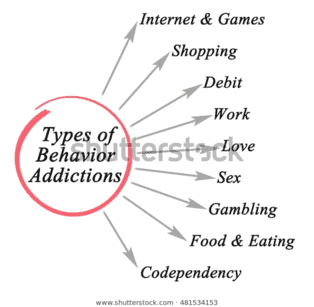
Behavioural addiction happens when an individual becomes pathologically focused on pursuing reward by engaging in behaviour. Often the individual struggles to refrain from the behaviour, experiences intense cravings, has difficulty resisting and has minimal awareness of the problems and or consequences that arise as a result of their behavioural addiction, including- loss of time and loss of the ability to prioritize other life functions and responsibilities.

  • Some examples of behavioural addictions are:

It is difficult to seek help or treatment if you are not sure that there is a problem. Identifying your addiction and understanding the consequences of it and deciding to seek help are the first steps to recovery.

CONSEQUENCES AND OR DANGERS OF ADDICTION

Whether it is sex, gambling or substances- when these activities are indulged and enjoyed the reward pathways in the brain release dopamine, also known as the “feel-good” hormone.

This chemical rush acts as a positive reinforcement to the body and over time the brain is conditioned to seek out that dopamine release. This leads to an altered mental state affecting decision-making and potentially leading to dangerous consequences as is the case with substance addiction which could result in an overdose. A behavioural addiction, such as gambling, could result in bankruptcy.

Behavioural addictions carry the same characteristics as that of substance addiction.

CHARACTERISTICS OF ADDICTION

Compulsive use or acting out on behaviour.
As the addict continues to ingest the substance or engage in the behaviour, tolerance develops and it takes larger doses of the substance or behaviour to produce the sought-after pleasure or relief.

Craving
This means that the body and brain send intense signals that the drug or behaviour is needed. Psychological cravings related to the experience of taking the substance or engaging in the behaviour may occur.

Loss of control
Addicts cannot predict or determine how much of the substance they will be using or when they will be using, however, once they begin, they cannot stop. The same loss of control applies to behavioural addictions such as gambling, sex, food or gaming.

Continued use despite adverse consequences
Behavioural addictions have negative consequences. Addicts often are not aware of these consequences due to denial. Adverse consequences include loss of time at work, failing interpersonal relationships and negatively impacted financial well-being. Addicts feel that the pleasure derived from the substance or behaviour outweighs the consequences.

Tolerance
Continual use of a substance affects the body which soon adapts and begins to tolerate the drugs pharmacological effect, as a result, the addict needs more of either the substance or the behaviour to achieve the same effect of the initial experience.

Withdrawal
Withdrawal symptoms are unpleasant physical symptoms when the substance or behaviour is withheld.

To conclude that the effects of substance addiction are different or more severe than behavioural addictions would be erroneous.

The mental, physical and spiritual effects of behavioural addiction are much the same as with substance addiction and both carry dire consequences to both the addict and significant others in the addict’s life and treatment for both is equally important.

If you or anyone close to you needs help with an addiction to sex, gambling, substances, alcohol or food, please contact us for a free assessment.

www.crossroadsrecovery.co.za

074 89 51043 JHB

012 450 5033 PTA

Resources
American Psychiatric Association www.mentalhelp.net
World Health Organisation: ICD 10 classification of behavioural disorders (www.nlm.nih.gov)
Goodman A: Addiction definition and implications (www.researchgate.net)
American Society of Addiction Medicine policy (www.asam.org)

No Obligation Addiction Assessment

Book a No Obligation Confidential Assessment at your nearest Treatment Centre Today.

Johannesburg Admissions: +27 74 895 1043
Pretoria Admissions: +27 82 653 3311
Close

Stories of Recovery

  • The encouragement, love and support from the team at Crossroads allowed me to eventually see that I was worth something - that my life could be turned around and that I could accomplish the things that had long been a forgotten dream.
    Oliver VG
    Read more
  • On the last day of my stint at Crossroads I could only express gratitude towards all who works there. A wise councillor once commented on my question when one is ready for rehab by explaining that when one is ready for rehab, rehab is ready for you.
    Johan B
    Read more
  • I was lost and my soul was broken until I ended up at Crossroads and was introduced to the Twelve Steps. With the help of their excellent staff and amazing support I have recently been clean for 18 months, I could not have done it without them!
    Carla S
    Read more
  • "Just for today I am more than three years in recovery. I have Cross Roads to thank for this wonderful gift. Cross Roads helped me to set a firm foundation in my recovery on which I can continue to build."
    Angelique J
    Read more
Left Arrow Right Arrow

Approved Medical Aids

Bestmed LogoBonitas LogoCAMAF LogoDiscovery Health LogoFedhealth LogoGovernment Employees Medical SchemeLiberty CorporateMedihelp Medical Scheme
add_action('wp_footer', function() { ?>